The Widows' Tree
Marjorie's family, from the Bull Oak to Adelaide: written for Roger, Ann, Chris, Cathy and Jean, from a pile of certificates, manifests, ships' logs and one very angry bull.
For twenty-five years I've been collecting pieces of paper about your family. Birth certificates, census pages, a police pension register, a coroner's ledger, a ship's log from South Africa, an Ellis Island manifest, a letter your great-aunt Min wrote in 1977. Each one on its own is dull: a name, a date, an occupation spelled wrong. Laid side by side, they turn into something else. They turn into a saga, the kind of thing television used to make miniseries out of, with fortunes found and lost, a man gored to death against an oak tree, a constable with a stone wound in his forehead, a gardener who grew orchids on a draper's wages, a boy who went to India and never came home, a carpenter who drowned in a busy harbour while nobody was looking, and an old hotel keeper in Pennsylvania who paid for three tickets across the Atlantic.
And running underneath all of it, generation after generation, is one pattern I didn't see until I put the pages together: this is a family held together by widows. Over and over, a man dies young, and a woman picks up the children and carries on. Keep an eye out for them. They're the real heroes here.
Your father's side
Your mother's side
The Bull OakLytchett Matravers, Dorset · Sunday, 12 August 1849
We start in Dorset, because that's where the oldest part of your tree is rooted. Your mother's mother's mother's mother was Eliza Roberts Crumpler, baptised at Affpuddle in 1809. The Crumplers had been in that corner of Dorset since the 1500s: farmers, higglers, wheelwrights, carpenters, a family so prolific that there are probably more Crumplers buried around Poole Harbour than in the rest of the world put together.
On a hot Sunday evening in August 1849, a Crumpler named Samuel, a wheelwright, carpenter and part-time farmer of fifty-five, went out across his field at Lytchett Matravers, near Poole. In it he kept a young bull he had raised himself from a calf: a Norman bull, of the breed from across the Channel that the French now call Normande. The Illustrated London News tells the rest:
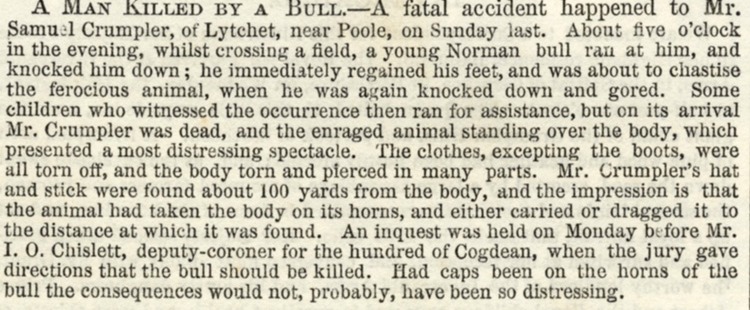
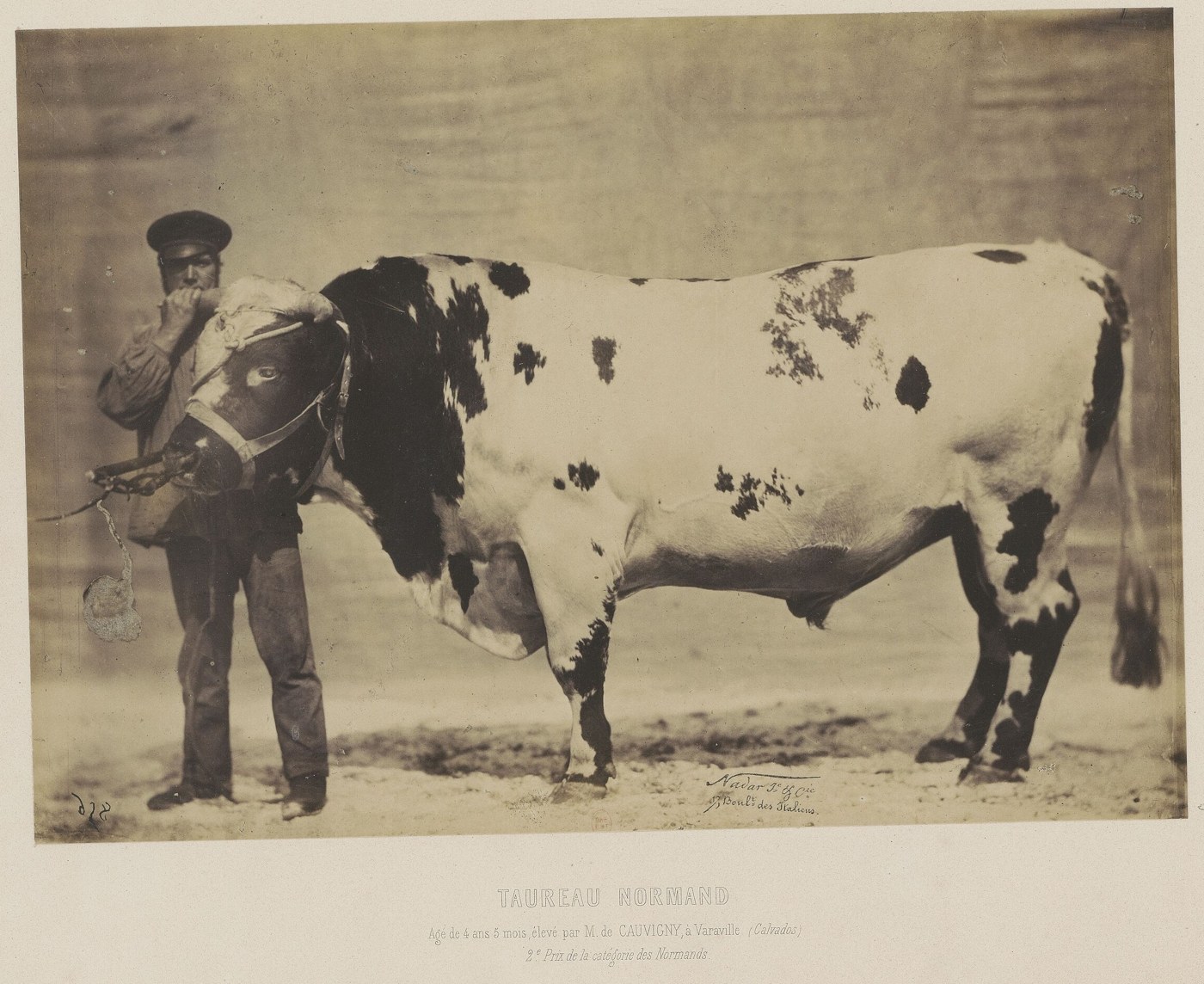
The bull was destroyed, as the jury ordered. Samuel was buried in the churchyard at Lytchett Matravers four days after he died.
Somebody carved the oak where he died. Look closely and you can still make out the letters S C, with a coffin cut beneath them (and, according to people who have stood in front of it, the year 1849 below that). The tree stands in a field the villagers call "Underdaykers", their word for Hundred Acres. It is still known locally as the Bull Oak. A local poet, Beau Parke, remembered being taken to see it as a boy in the 1930s. Someone had bored a hole in the trunk, and the sap ran out and left a black stain down the bark. The village children believed the hole was where the horn went in, and the stain was Samuel's blood.
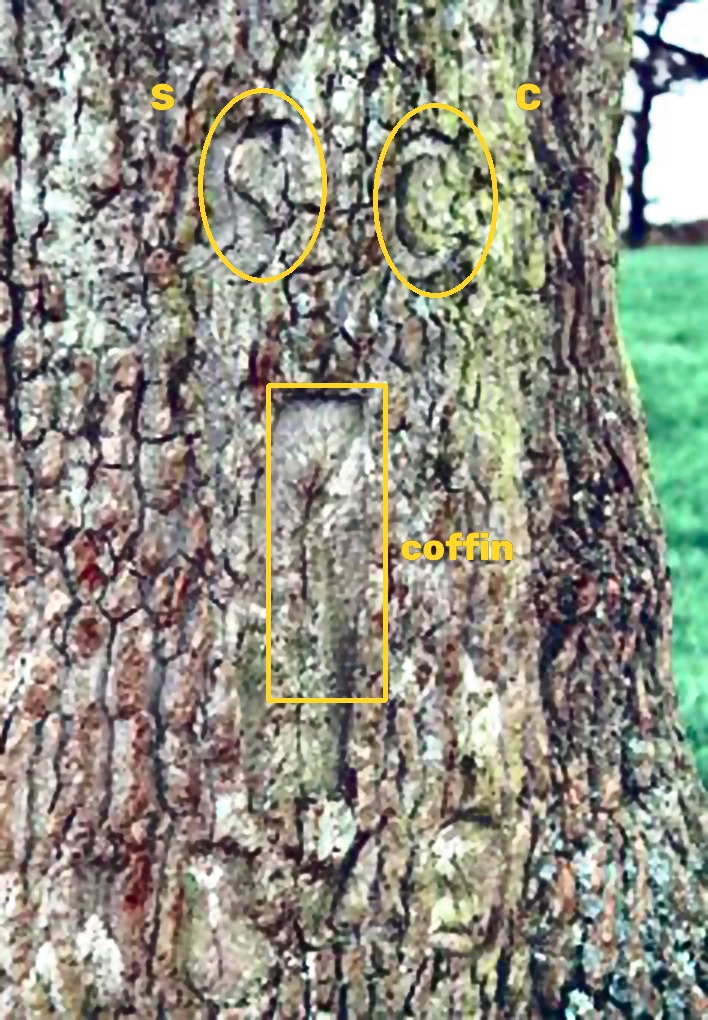
Samuel is a cousin rather than a direct ancestor: he and your mother's Crumplers both descend from a John Crumpler born about 1600, which makes Samuel your mother's fourth cousin, four times removed. But the Crumplers kept close in that small world. Samuel's son Thomas became the landlord of the Chequers Inn at Lytchett Matravers by 1854, and in 1901 a Mary Crumpler was still keeping the Chequers. So when you hear about the Crumpler who kept a Dorset pub, and the Crumpler who was killed by a bull: they were father and son.
The Farmer of ArneArne, Dorset · 1852
Eliza Crumpler married Joseph Boyt, a shoemaker from Wool, and the two of them climbed. By 1837 Joseph was a "shoemaker and farmer"; by 1851 he was farming two hundred acres at Arne, on the heath above Poole Harbour, and employing four labourers. For a shoemaker's family, that was a real rise in the world.
It didn't last. In September 1852 Joseph died of what the certificate calls "King's Evil", scrofula, a tuberculosis of the glands in the neck that people once believed could be cured by the touch of a king. He had been ill for several years. He was about fifty, and Eliza was left with the children and the farm. She lived another forty-five years, a widow, and died at Wareham in 1897.
That's our first widow. Her daughter, Eliza Bula Boyt, born at Arne about 1844, was about eight when her father died. She would grow up to marry a policeman.
The ConstableN Division, Islington · 1870-1888
Charles Feltham was born in Scots Lane, Salisbury, in 1847, the son of a tailor. He married Eliza Bula Boyt about 1868, and on 29 August 1870 he joined the Metropolitan Police, warrant number 53141, and was posted to N Division, Islington. This was the early Victorian police: barely forty years old as an institution, hated by a good part of the population it policed, walking a beat in one of the roughest districts of London.
After seventeen and a half years he left. When a constable was pensioned, the Met made a "Description of the Pensioner", partly so he couldn't be impersonated. Charles's, dated February 1888, says he was forty-one, five feet eight and a half, with dark brown hair, hazel eyes and a fair complexion. Then it lists, one by one, the injuries he received on duty:
(1) broken left arm; (2) wound back crown of head, longitudinal in direction, about three inches long, done with a slide; (3) a star wound above forehead done with a stone; (4) a contusion middle of front of left leg; and (5) an abrasion over left knee.
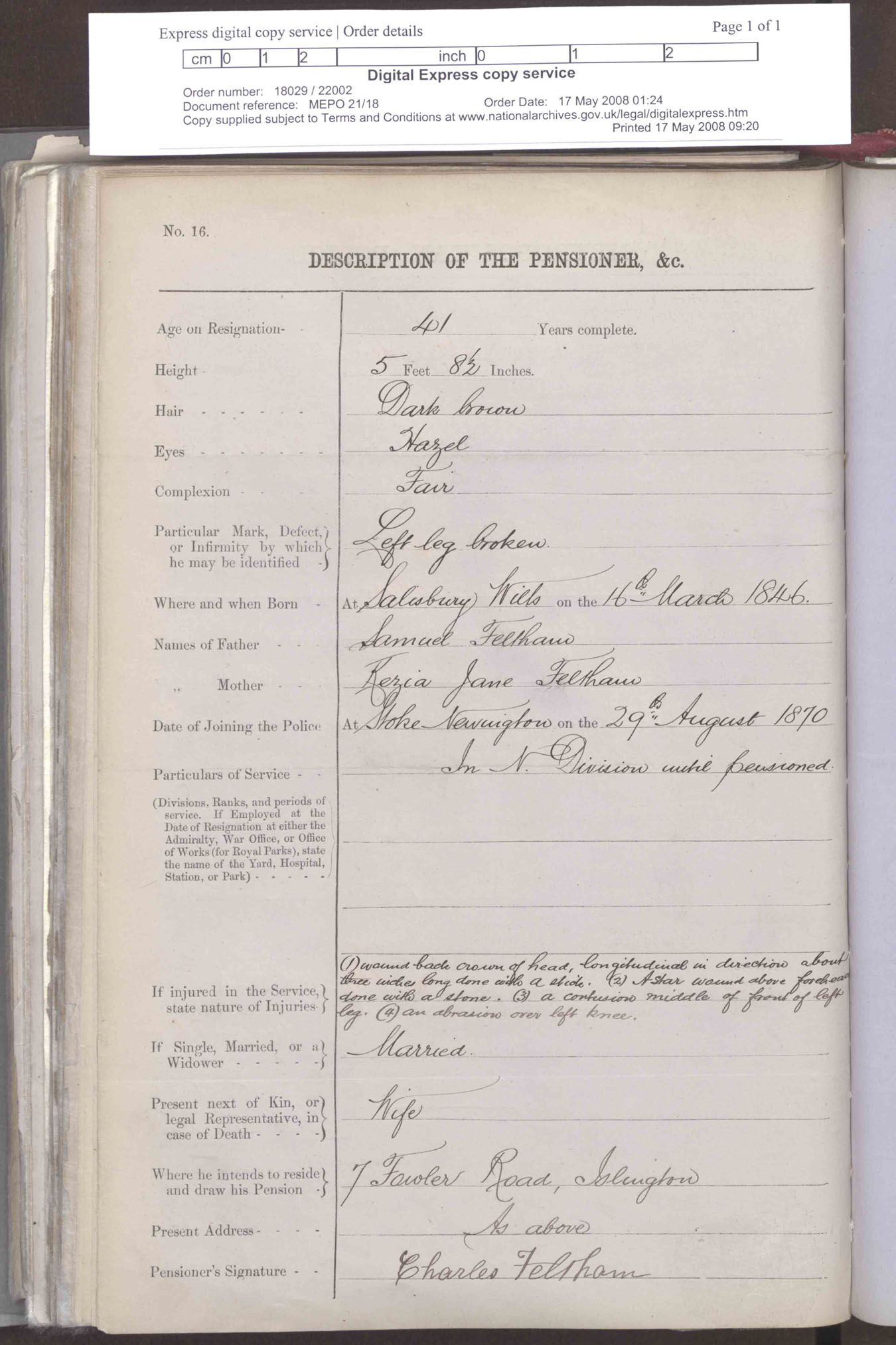
A broken arm, a three-inch gash across the back of the head, a stone to the forehead hard enough to leave a star-shaped scar. That is what policing Islington cost one man. He was given a temporary pension of £37 18s 2d for one year.
And then he did what police pensioners did: he went on working. In the 1891 census he is a "lunatic attendant", a keeper in a lunatic asylum. (The family memory is that he became a prison warder. The census says asylum, but in 1891 the two jobs were not so different: locked doors, keys and violent men.) By 1901 he was mending boots at home. Charles and Eliza had ten children, nine of whom were living in 1911. Their youngest girl, born in Islington in February 1890, was Lilian Kate Feltham, your grandmother.
Charles died of stomach cancer at Bemerton, outside Salisbury, on 8 February 1921, back where he started. Eliza died seventeen days later, and both were buried at St John's, Bemerton.
Lilian married Walter Amos Charles, from a long line of Northamptonshire shoemakers and boot clickers, who had started work at fourteen as a telegraph messenger and became a tailor. Their daughter, Marjorie Doreen Charles, your mother, was born at 3 Clifton Terrace, Torquay, in October 1922.
The Orchid GrowerHutton, Pontypool and Caterham · 1846-1922
Now to your father's side, and to my favourite person in the whole tree.
Clement Parker was born in Hutton, Somerset, in October 1846, the son of George Parker, the village blacksmith. When Clement was nineteen months old, his father died of consumption, aged thirty-four. There's widow number two: Ann Parker, left with small children in 1848, who kept going for another forty-three years and was running a grocer's shop in Hutton when she was nearly seventy.
Clement became a gardener, and a remarkable one. By 1881 he was gardener to Edwin Fowler, a draper and magistrate of Pontypool, and in June 1882 he took his master's flowers to the great Bath and West of England Show at Cardiff. This was the height of the Victorian orchid craze, when wealthy men paid fortunes for rare plants and sent collectors to die in jungles to get them. The Western Mail reported:
Mr. Clement Parker, gardener to Mr. E. Fowler of Pontypool, exhibits nothing but orchids. These are of very fine quality, and present an almost infinite variety of colour, but it is a pity Mr. Fowler did not instruct his gardener to thoroughly unpack the flowers before staging them. As on Tuesday morning there was wool around them.
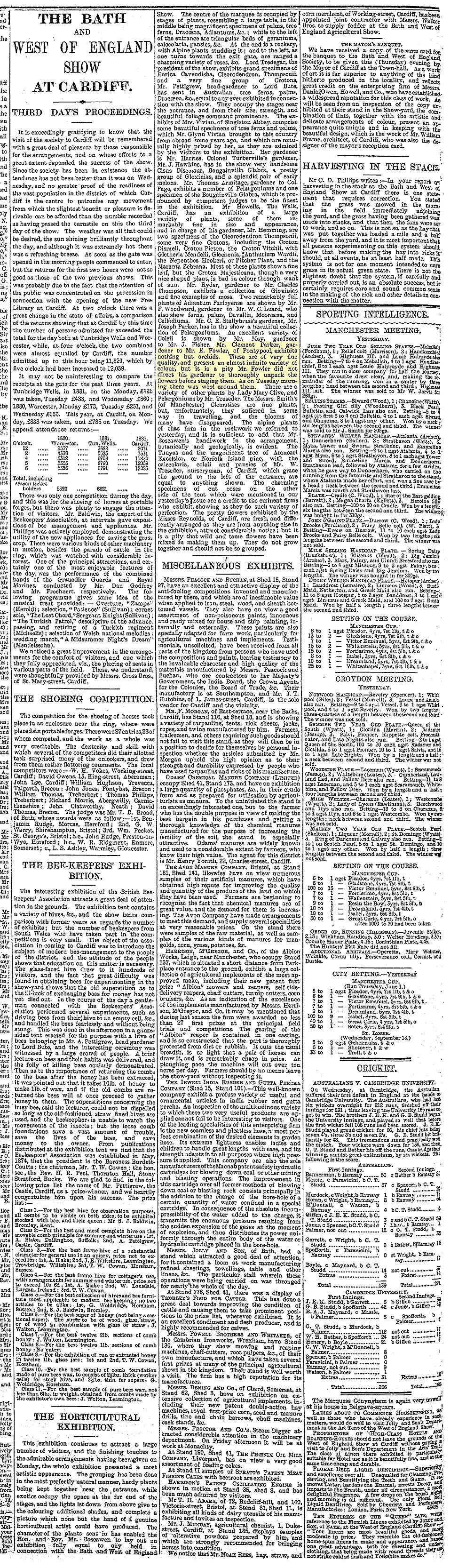
(Marjorie and I built a computer-controlled orchid house in England, with automatic misting and motorised blinds, years before either of us had heard of Clement. Some things are in the blood.)
In 1867 Clement had married Sarah Ann Morgan, the daughter of a Pontypool collier. According to family tradition, Sarah Ann believed she was descended from the old Princes of Wales; she had friends in landed and titled families who still called on her in their carriages, but who would have nothing to do with her husband the gardener, because she had "married beneath her". One of these grand ladies, remembered only as "Lady Lyons, or perhaps Lines", was godmother to her eldest daughter. Not one of these claims has turned up in a single record, and her father was a collier at Sowhill. But the story was told and retold for a hundred years, and it tells you how Sarah Ann saw herself.
Here is a curious footnote. In 1901, two doors from the Parkers on Waterloo Road, Newport, lived Horace Sampson Lyne, a Newport solicitor who would be president of the Welsh Rugby Union for forty-one years, and his wife Mary. Lyne. "Lady Lyons, or perhaps Lines." Was the grand godmother a Lyne? We can't prove it. Minnie was born in 1868, when Horace was seven, so it would have been an older lady of the family, and none of the Lynes had a title. But it is the closest match we have found. (The family also remembers a connection with the Huntley & Palmers biscuit family. No record has turned up to support that yet, although the Palmers were Somerset Quakers, like the great-aunts Aunt Min remembered visiting in Weston-super-Mare.)
By 1901 Clement and Sarah Ann were living in the lodge of Springfield, a big house on Waterloo Road, Newport, which belonged to Theophilus John Beynon, a shipowner. Sarah Ann died in 1902, and Clement moved to Caterham in Surrey and went on gardening. On census night in April 1911 he was sixty-four, a widower at 7 Foxton Lane with a seventy-four-year-old housekeeper.
Then he surprised me. A few weeks after that census, Clement married Harriett Sarah Seal, a Dorset woman from Bridport, nearly thirty years younger than he was. Early in 1912 they had a daughter, Ruth. Clement was sixty-five. Ruth was your grandmother's half-sister, born the year your grandfather drowned, and she was your father's aunt, though five years younger than him. In 1921 the three of them were living at The Cottage, Knaresdale, Caterham, where Clement, at seventy-four, was "working gardener" to a private gentleman, A. H. Wallis.
The next year, on Christmas Day 1922, at seventy-six and still working, he was found dead of a stroke in the meadow at Longmead, beside the cottage where he lived on the grounds he kept. The coroner, whose name was, I promise you, Nightingale, recorded natural causes. He died on his own ground, among the plants, on the one day of the year even a gardener takes off. Harriett was left a widow with a ten-year-old girl. (Ruth grew up, married Harry Cole at St Leonard's Church in 1935, went into service with him in Ealing as a house parlourmaid, and died at Beaconsfield in 1972, aged fifty-nine.)
Clement's ChildrenNewport · 1868-1910
Clement and Sarah Ann had a big family, and almost every one of them has a story. Your great-aunt Minnie Alexandra Frost, "Aunt Min", who lived to be 101, wrote some of them down in 1977, and records have now confirmed most of what she wrote.
Minnie, the eldest girl, had golden curls down her back. One day in Newport a lonely young tailor's cutter, newly arrived in town, stopped her to ask the way to the firm whose advertisement he'd seen in the paper. His name was John Frost. Aunt Min, his daughter, said he had been apprenticed to a tailoring firm in Bristol and treated so badly that he ran away. The 1881 census tells the rest: at sixteen, John was an inmate of Kingswood Reformatory, just outside Bristol, where boys were taught trades. He had made the best of it, learned to cut cloth, and walked out into a new life. Sarah Ann took pity on the boy and invited him to Sunday lunch, and he married the girl with the golden curls.
Ann Louisa, "Aunt Lou", never married. She made dresses, travelled to America (we'll come to that), and died at her nephew's house, 52 Leigh Sinton Road, Malvern Link, in March 1953, five weeks after her sister.
Gertie, the youngest, was a gifted musician and artist and died in 1910 at about twenty-five. Alice married a schoolmaster. Alfred managed a wallpaper print works for Sanderson in London and had nine children. There were twin boys who died as babies, whose names we still haven't found.
And then there was George.
The Engineer in IndiaUmballa, Karnal, Meerut and Tonk · 1901-1906
George Clement Parker was supposed to become a teacher. According to Aunt Min, he stowed away on a ship bound for the West Indies instead, helped the captain put down a mutiny, and did well out of it. From there he went to Ceylon and India, worked as librarian and secretary to a Maharajah, joined the Indian service, became an engineer and helped to build the great canal system of the Punjab.
It sounds like a boys' adventure story, and the stowaway and the mutiny may be exactly that; nobody has found a record of them. But the Indian part is true. The Times of India and the family's own Welsh paper tell it:
On 20 November 1901, at St Paul's Church, Umballa, George married Gertrude Verschoyle Rose, the elder daughter of a retired Executive Engineer of the Punjab. In 1902, at Karnal, where he was working for Punjab Irrigation on the canals, they had a daughter. In 1904, at the hill station of Kasauli, a second daughter. In December 1905, at Meerut, a son. By then George was State Engineer to the princely state of Tonk, in Rajputana, ruled not by a Maharajah but by a Nawab. On 2 May 1906, at Tonk, George died. He was thirty-one.
Back in Newport, the South Wales Argus printed four lines: "PARKER. On May 2nd, 1906, at Tonk, Rajputana, India, George Clement, elder son of Clement and the late Mrs. S. A. Parker, Springfield Lodge, Newport." His widow took their three small children back to her own family, and the Parkers lost touch with them for ever. Somewhere, probably in England or India, there are descendants of George Parker who have no idea about the gardener, the orchids, or you.
That's widow number three: a young woman in India with three children under four.
The Carpenter Who FellEast London, South Africa · Friday, 30 August 1912
Clement's daughter Sarah Ann, your grandmother, married Francis William Wilson at Newport on 7 January 1903. Francis was a Belfast man, born at Jordanstown in 1874, the son of a riveter and plater in the shipyards, the city that was about to build the Titanic. He was a carpenter at sea. Your father, Frank, was born in Belfast in May 1907, and by 1911 Sarah Ann, Frank and Aunt Lou were living at Birkenhead while Francis was away at sea.
In August 1912 he was ship's carpenter on the Clan Chisholm, a cargo steamer working the South African coast. She docked at No. 3 wharf, East London, on the 29th. At 11.30 the next morning Francis was painting over the side. Nobody saw him fall. The ship's log records what happened next:
This day Francis Wilson, Carpenter, while painting ... on the boom was discovered in the water by some [men] on the wharf. Two Customs officers passing at the time and seeing [them] looking into the water also had a look and saw a man in the water. They immediately descended the piles of the wharf and got hold of him. ... Artificial respiration was started at once and a doctor got immediately who on arrival pronounced the man dead.
The Clan Chisholm sailed for Mozambique three days later, before the court had even given its verdict. The log lists what he left behind: six shillings and eightpence in cash; a blue serge suit; five shirts; a straw hat; a silver watch; a packet of envelopes and notepaper; four feet of flannel curtains; and a box of carpenter's tools: a saw, a plane, a rule, six wood chisels, three caulking chisels, two hammers, and "1 brace but no bits".
He was buried in the East London cemetery, Church of England section 6C, grave 404. Decades later, when we asked a South African researcher, Ann Clarkson, to find and photograph his grave, she had to take two armed guards with her to go into the cemetery.
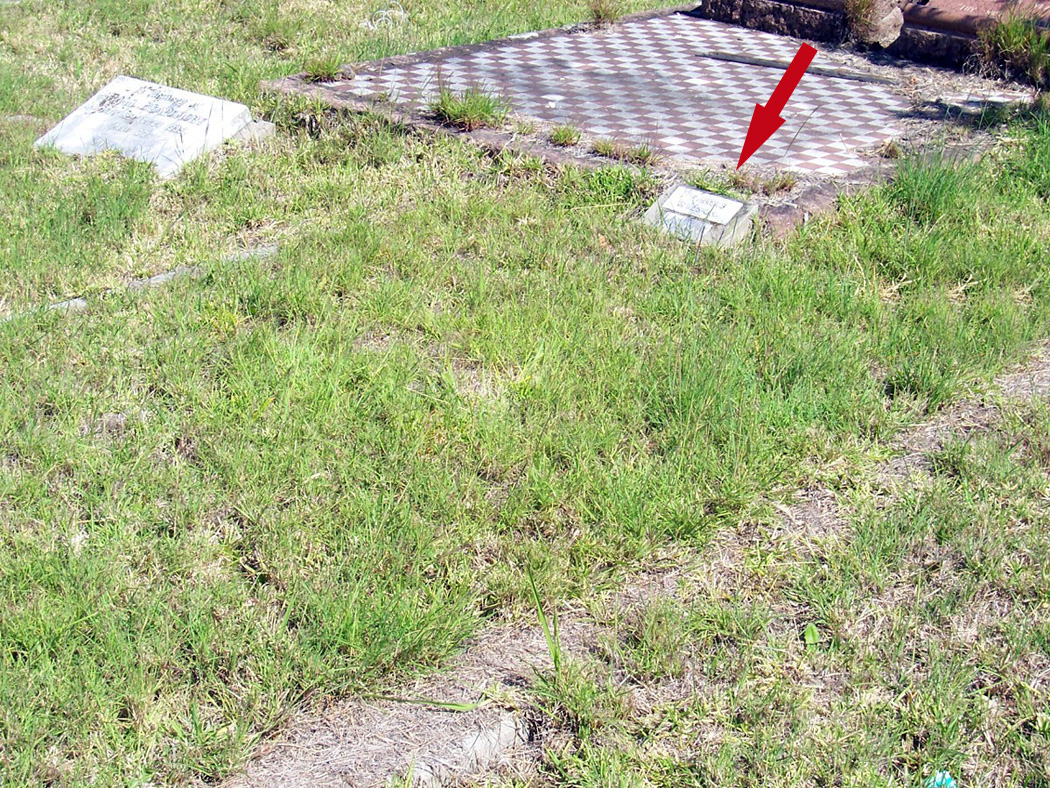
Sarah Ann was thirty-five, with a five-year-old son. There is a little more sorrow in the records, too: a baby, Horace Parker Wilson, was born and died at Birkenhead that same year, 1912. A certificate would be needed to prove he was hers, but the name says a lot, and Aunt Min wrote that Frank was "Auntie Sarah's only surviving child". Sarah Ann may have buried a baby and lost her husband in the same year.
That's widow number four, and the one who matters most to you. Sarah Ann never remarried. By 1939 she was a "retired schoolteacher", living with her son in Winchester while he worked as a relieving officer for the poor and volunteered with the Auxiliary Fire Service. She raised your father on her own.
But first, she went to America.
Five Weeks in Wilkes-BarreLiverpool, Ellis Island and Lee Park, Pennsylvania · April-June 1913
On 17 April 1913, eight months after Francis drowned, Sarah Ann Wilson, widow, thirty-five; her son Frank, five; and her sister Louisa Parker, forty, dressmaker, sailed from Liverpool on the White Star liner Celtic. They landed at Ellis Island on 27 April. On 8 June they arrived back at Southampton on the Majestic. For a hundred years nobody in the family knew whom they had gone to see, or why they came home.
The answer was on the facing page of the manifest the whole time, in the column headed "whether going to join a relative or friend". The clerk had written: "Uncle, Jas. Morgan, 3 Lee Park Ave., Hanover Township, Wilkes-Barre." Their passage, the manifest says, had been paid by the uncle. Sarah Ann carried $280.
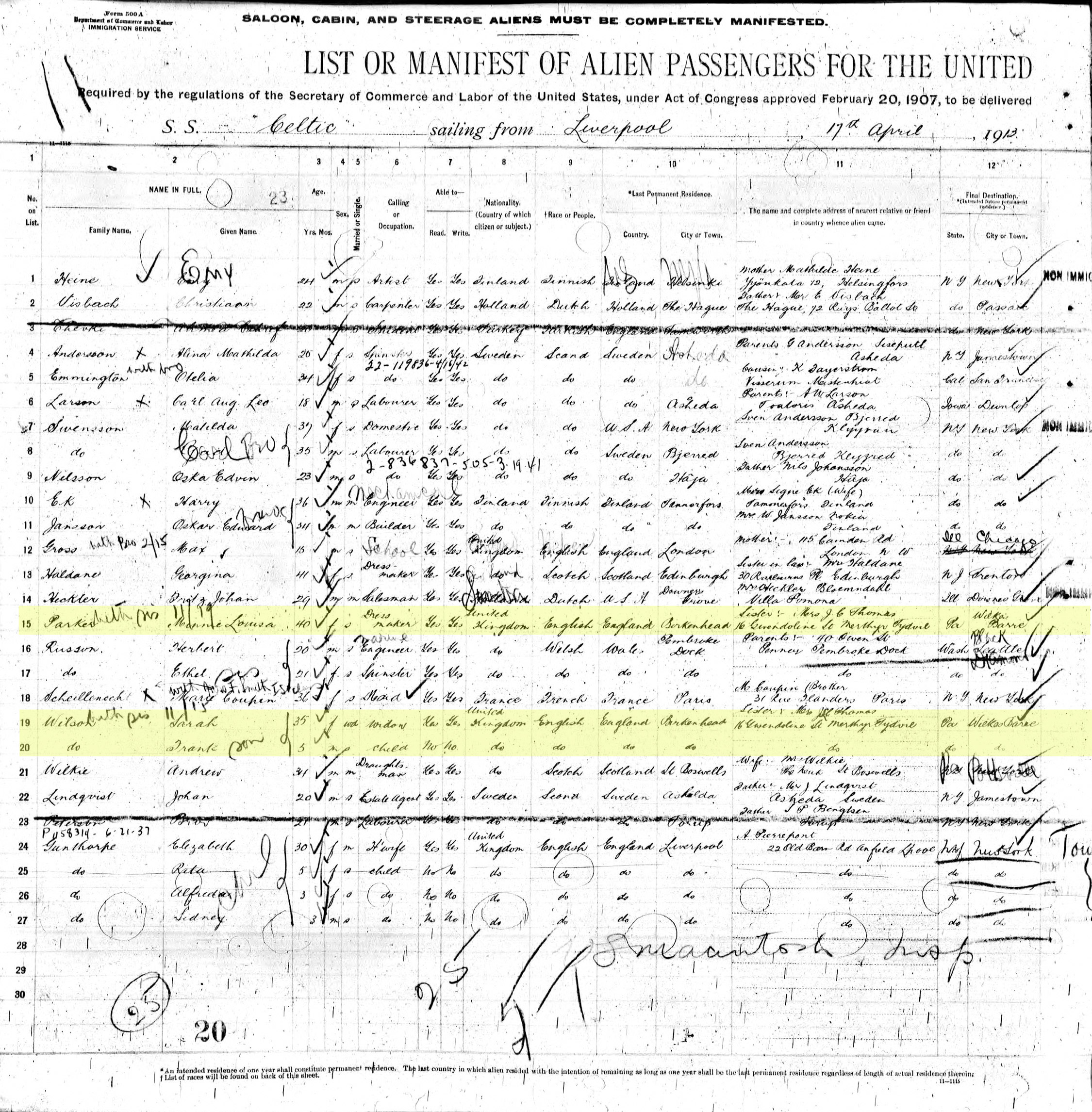
James Morgan was Sarah Ann Morgan's younger brother, born at Sowhill, Pontypool, in 1846: a collier's son who at sixteen was hauling coal underground. In 1869 he emigrated to the anthracite country of Pennsylvania, where half of Wales seemed to be going, and he did what a clever Welsh boy could do there. He didn't stay down the pit. He went into the hotel business.
By the 1880s he was proprietor of the North Branch Hotel on Main Street, Nanticoke. In January 1885 the Wilkes-Barre Times Leader reported that cigars, liquor and cash had been going missing from his bar; James and a friend sat up all night and caught the culprit, a boarder, sneaking towards the bar with a light. The thief got away, packed up and was never seen again. In 1891 the paper reported that James had refitted the place and that it was "the coolest place on Main street", with Reichard's best beer on tap and one of the best tables in town. Around 1893 he moved to Lee Park, just outside Wilkes-Barre, and ran his hotel and bar at No. 1 Lee Park Avenue. By 1910 he owned the house outright, with no mortgage.
About 1882 he had married Margaret Evans, a widow from Beaufort, Monmouthshire, who had been brought to America as a baby; her own father had drowned at a dam. Margaret had had four children, and by 1910 all four were dead. James had none of his own. In July 1911, after a series of strokes, Margaret died. About a year later James, now in his late sixties, retired and let the bar to other men.
So picture him in the spring of 1913: a widower in a big house in Pennsylvania, comfortably off, no children, no wife, his hotel run by strangers. And across the ocean his niece, a young widow with a small boy, and her unmarried sister, a dressmaker with no husband to keep her. He paid for all three tickets.
Five weeks later they were on their way home.
No record says why. These are Marjorie's and my best guesses, and they are only guesses.
The likeliest story is that the visit was a trial, and the trial didn't work. James was probably offering a home, and perhaps hoping for a housekeeper and a family around him in his last years. For Sarah Ann and Louisa, the price was Lee Park: not a genteel town, but a coal patch outside Wilkes-Barre, and his house was a saloon with a bar on the ground floor, leased to someone else. Two respectable chapel-going Welsh sisters with a five-year-old boy may simply have looked at it and decided it was no place to raise him.
They may also have been homesick, or Louisa may not have been able to make a living dressmaking there. James may have been difficult. He was an old man who had run bars all his life, and he was already ill: he died five years later of Bright's disease, a slow kidney failure. The two sisters were still deep in grief: Francis had been dead only eight months, and perhaps a baby with him.
Whatever the reason, it was their decision. The uncle had paid their fare one way, and they paid their own way home.
Here's the "Rich Man, Poor Man" turn of it. James Morgan died at 1 Lee Park Avenue on 22 April 1918, at seventy-two, and was buried in Hollenback Cemetery, Wilkes-Barre. His obituary says he left "one brother and one sister in England". He owned his house free and clear. Eleven weeks before he died he had even applied to take back the licence for the bar in his own name. We don't yet know who inherited it all. His will should be in the Luzerne County courthouse, and it's on my list.
If the sisters had stayed, little Frank Wilson would have grown up an American, in the anthracite country, perhaps the heir to a Pennsylvania hotel. Instead he went home to Birkenhead with his mother, and grew up in England. He worked on radar, married your mother, and had six children on the Malvern Hills. One of them was Marjorie, and she married a boy from Honolulu. So in the end the family made it to America after all, and well beyond it.
(One small correction to a story I told before. I once wondered whether the two developers who laid out the Lee Park neighbourhood in 1902, Jesse T. and William P. Morgan, might be James's sons. They weren't. James had no surviving children. Morgan is just a very common name in Wilkes-Barre.)
The Boy Who Came HomeBirkenhead, Winchester, Malvern and Adelaide · 1913-1981
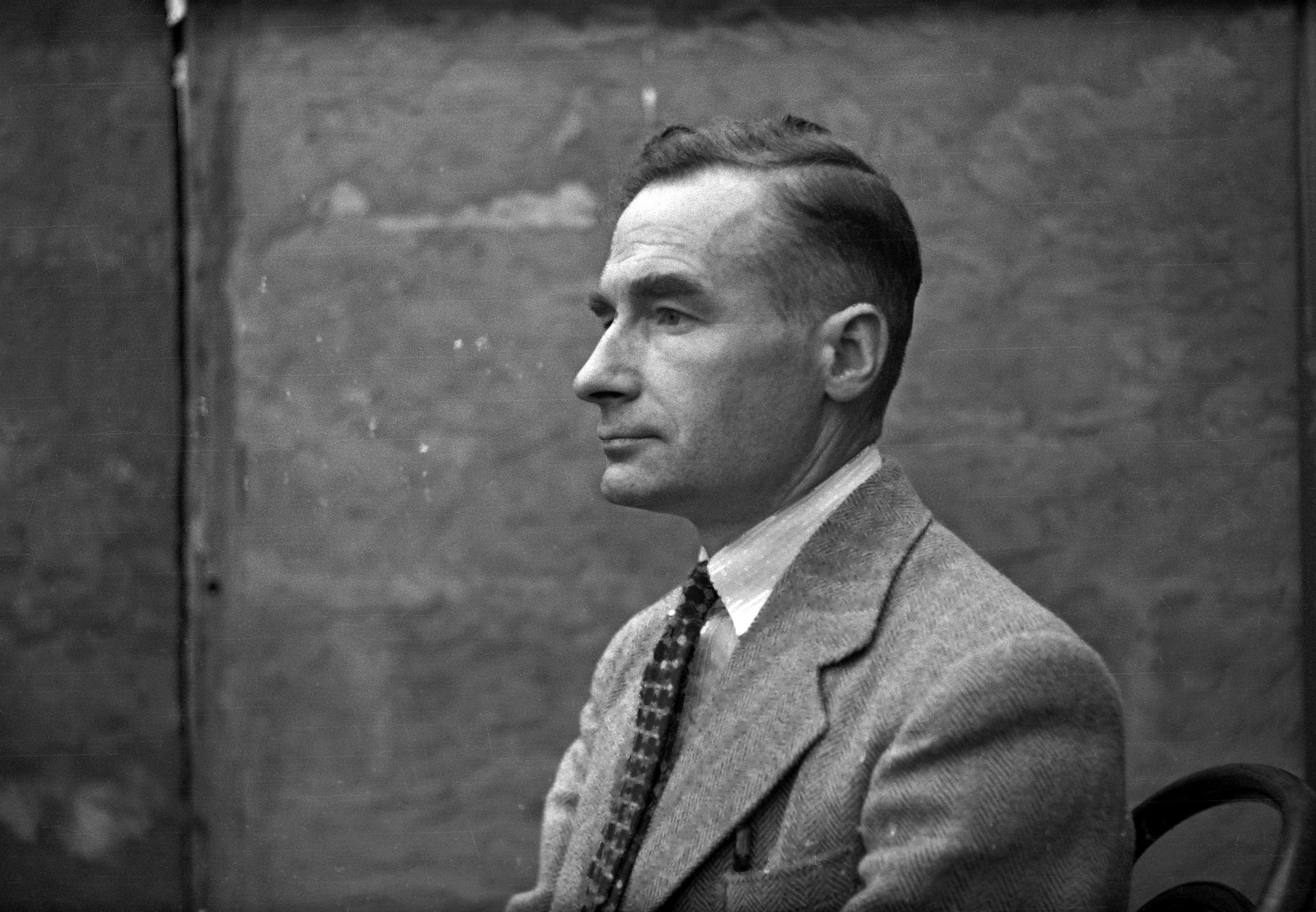
You know the rest better than I do. Frank grew up with his mother and Aunt Lou. In 1939 he was in Winchester, an assistant relieving officer for the poor, and a volunteer in the Auxiliary Fire Service. On Boxing Day 1942 he married Marjorie Doreen Charles at Sparsholt. He went to work on radar at the Telecommunications Research Establishment at Malvern, the place that helped win the war in the air. He was a radio ham, a watercolourist, and a photographer with his own darkroom who kept meticulous notebooks. He built the family's house on the Malvern Hills. In 1953 his mother died at Exeter in February, and his Aunt Lou died at his house in Malvern Link five weeks later. In 1970 he and your mother emigrated to Australia, and he died in Adelaide in September 1981.
The PatternWhat the papers say when you lay them side by side
Line all these people up, and the same story keeps repeating:
Ann Parker in Hutton, widowed in 1848 with a baby, kept a shop and raised a gardener. Eliza Boyt at Arne, widowed in 1852 on a two-hundred-acre farm, lived forty-five years alone. Harriet Frost of Taunton, Aunt Min's grandmother, had a husband whose own family paid him to stay away, and she brought up at least six children more or less by herself. Margaret Morgan, whose father drowned at a dam, buried all four of her children. Harriett Parker, Clement's young second wife, was widowed on Christmas Day 1922 with a daughter of ten. Gertrude Parker was left in India in 1906 with three babies. And Sarah Ann Wilson, widowed by a harbour on the far side of the world, took her son across the Atlantic and back, made herself a schoolteacher, and raised your father alone.
The men in this family were blacksmiths, shoemakers, tailors, carpenters, gardeners, constables and engineers. They worked with their hands, and too many of them died young: of consumption, of scrofula, of a bull, of the sea, far from home in India. The women outlived them, and kept the family going. Every one of you is here because one of those widows decided, again and again, to carry on.
Every fact in this story comes from a document on the family website (lordoflucies.com/tng): birth, marriage and death certificates; census returns from 1841 to 1911; the Metropolitan Police pension register; the Surrey coroner's register; the log and crew agreement of the Clan Chisholm; the Celtic and Majestic passenger lists; the Western Mail, the Illustrated London News, the South Wales Argus, the Times of India and the Wilkes-Barre Times Leader; and Aunt Min's 1977 letter. Where we are guessing, it says so. Ask me for any of them. For the Walsh, Wilkinson and King side of the family, see the companion page, Everybody Lied.